


BLOGDOG
Your personal cyber security and anti-hacking news
The Edge in Fraud Protection with Credit Card Protection Services!

Credit card fraud is a harsh reality that leaves many trembling in their boots for fear of the imposing threat.
What it is, how it happens, and most importantly, what you can do to protect yourself from it are the hot topics we’ll discuss here.
If you’re a card-carrying citizen of the world, and you want a full credit card protection, then you’ll want to listen up and consider services that provide credit monitoring.
What Is Credit Card Fraud?
Credit card fraud refers to the illegal use of a credit or debit card.
This could include something as small as purchasing a burger at a diner with a credit card that was found between the pleather booth cushions, to an offense as large and devastating as draining someone’s account by hitting up the local Lamborghini joint.
Fraud can occur by swiping the actual stolen card or by obtaining those precious digits and using them online or over the phone for purchases.
The definition of credit card fraud is vast, as are the outcomes — from dealing with annoying chargebacks and ordering new cards to overcoming the devastation and heartbreak of a stolen identity.
How Credit Card Theft Occurs
Do you have any idea how easy it is for someone to steal your details?
Credit card theft happens on a daily – no, minute-by-minute – basis. In fact, there are 7-10 million credit card theft victims each year. That’s more than 19,000 per month, 799 per hour, and 13 per minute!
Here’s how these attacks generally happen:
- Skimmers: You know those pocket-sized little card swipers that helpful waitresses use to run your card for you? Or the thing you swipe your card through at an ATM? Well it’s easier than you think to get your hands on one of these “skimmers” and an extremely easy way for a thief quickly record your personal card data.
- WiFi networks: Free WiFi isn’t always the gift you think it is. Hackers frequently piggyback onto these signals, collecting bank information like it’s being given out for free.
- Phishing scams: Whether it’s an email, SMS, or pop-up, these alerts always seem urgent and in need of immediate action.
Criminals design phishing scams this way to motivate you to act quickly before you’ve had time to think things through. All it takes is one message to penetrate your psyche, and you’ve opened the door to a world of hacking pain.
(And we know you really want to help your Aunt Gertrude who is stuck in Nigeria and desperately needs you to wire her $10,000, but before you click and send, pick up the phone and give her a call).
Credit card theft can happen at the coffee shop, bank, or even at home.
These are just a few of the most common ways hackers attack, but thieves are constantly coming up with smarter and easier ways to get between you and your banking details, so get credit card protection and always be on guard whenever using, transferring, or sharing credit or debit card information.
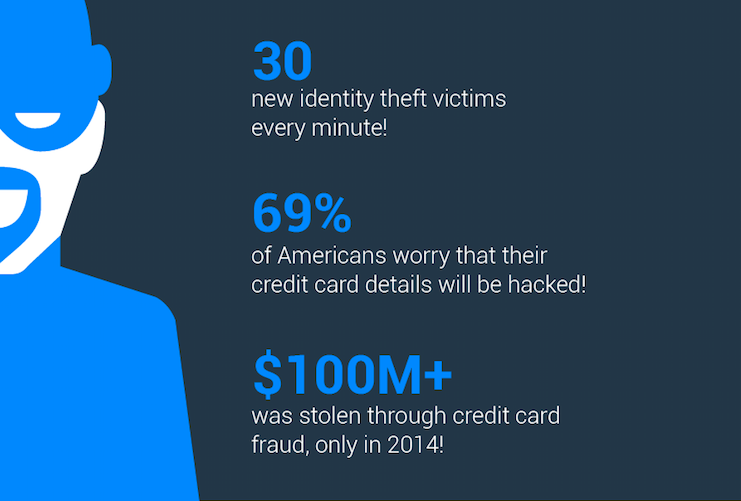
Fortunately, securing your cards is now easier than ever! Keep reading…
Fraud Prevention and Credit Card Protection: What You Need To Do
Not so sure it can’t happen to you?
Credit card fraud accounts for $5.5 billion worth of fraudulent charges and losses.
The time is now to take the necessary precautions to ensure that you have credit card fraud detection so you aren’t the next credit or bank account that gets hit. Implement these tried and true tactics for steering clear of theft:
- Only buy from trusted websites.
If it doesn’t have secure, encrypted transactions, RUN!
The best way to know is to look for the security seal on the URL. A website that looks like this: https://sitename.com is secure (note the “s” after the “http”). A site that looks like this:http://wewantyourcash.com is not.
- Never give your payment details without verifying the source.
If you receive an email, urgent phone call, or warning notice that requires you to enter banking or credit card information, STOP!
This is probably a scam attempting to skim your details. Verify the message by calling your local bank or by contacting the website or account provider directly
(don’t click on a link within the email that will lead you to the website, these are usually false links designed to trap you).
- Check your transaction history frequently.
You wouldn’t believe how much damage is done due to sheer negligence.
Scanning your history periodically can save you from a whole heap of heartache, and it only takes a few moments. If you have online banking, you can do this as often as once a day (just make sure you are checking from a secure network).
If you receive monthly statements in the mail, comb through these well to notice any discrepancies or unfamiliar charges. Anything fishy should be reported immediately.
Credit card issuers have convenient policies covering fraudulent charge holders, but only if you report the incident within the allotted timeframe (usually 60 days).
- Report lost or stolen cards immediately.
We are so naive with this one. I left it in my other pants; I think I gave it to my daughter; It’s probably sitting on the kitchen counter.
The rule here is always better to be safe than sorry. Unless you know for sure where your credit card is, assume the worst, and report it stolen.
- Destroy expired cards so the number is totally unreadable.
Trash skimmers are hunting down your card in deplorable ways.
- Don’t photograph, send, write down, or give over in a loud voice your credit card details or pin numbers.
- Change your mailing address immediately when you move.
Bills, bank statements, and other mailings can have important information you don’t want falling into the wrong hands.
How to Report a Fraud
In the US, The Fair Credit Billing Act protects victims of credit card theft and fraud.
If you notice illegal activity on your account, contact the card provider immediately both via telephone and in writing giving them as much information as possible.
A fraud affidavit will be issued for you to fill out and return to the card issuer.
For more information, call 800-876-7060 or visit identitytheft.gov
How Credit Card Protection Services Offer Superior Fraud Detection
One final and irreplaceable level of credit card fraud protection is a CardProtector.
This easy to use technology of this tool will scan black market databases for your credit card information, guaranteeing that your credit cards are never being used by someone who isn’t you (or authorized by you).
You can get your first year with the CardProtector for free when you invite 3 friends to join you
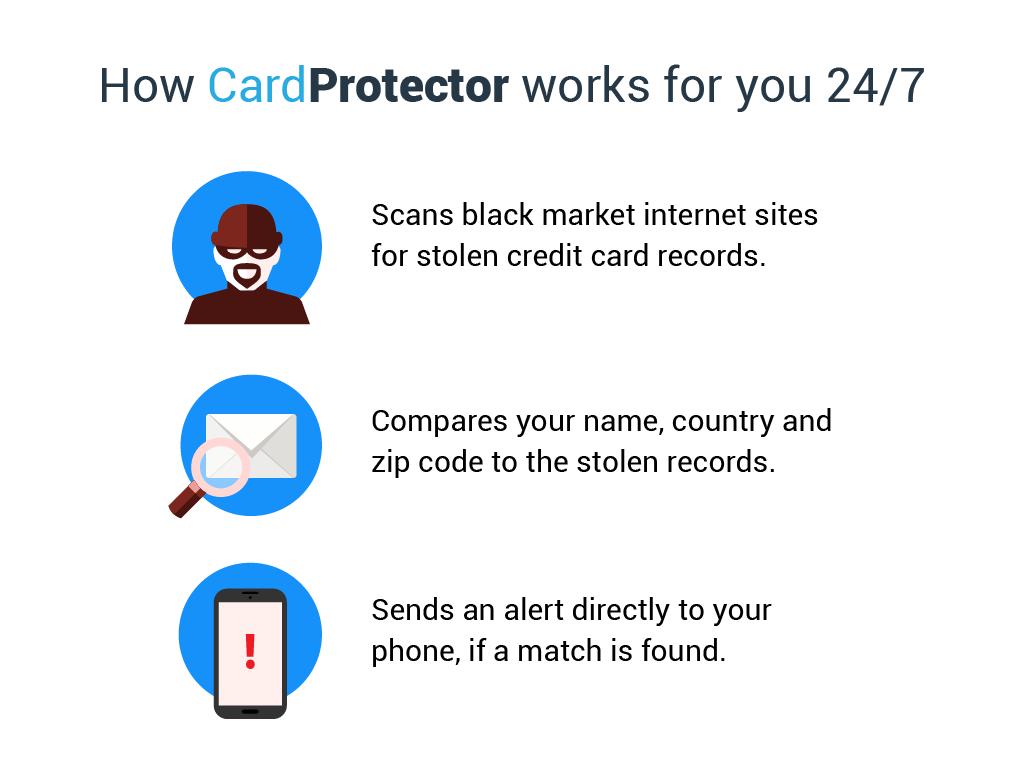
Here’s how it works:
- Enter your name, country, and zip code into the CardProtector service of the LogDog app. (You do NOT need to enter your credit card info.)
- The CardProtector scans black market lists of stolen credit card information, comparing the data in the database with your given details.
- The CardProtector automatically sends you an alert if any match is found so that you can then contact the card issuer and freeze the account. That means you get minute-to-minute credit card fraud protection around the clock.
Now isn’t it time you started protecting your credit cards from theft the right way? Try using LogDog’s credit protection services for your iOS or Android!
Summary
- Download the LogDog app for iOS or Android.
- Open the CardProtector service of the LogDog app.
- Enter your name, country and zip code. (You do NOT need to enter your credit card info.)
- Let the CardProtector run its scans of black market lists of stolen credit card information,
- You will automatically receive an alert from The CardProtector if your card is on the stolen list.
- Alert your credit card company to freeze your credit card.

2 thoughts on “The Edge in Fraud Protection with Credit Card Protection Services!”
Leave a Reply









awesome article
Thanks